LED Wall Rental for Events
When a ballroom screen looks washed out, a trade show booth disappears into the aisle, or a festival backdrop cannot hold up in daylight, the issue usually is not content. It is display technology. LED wall rental for events solves that problem by delivering brightness, scale, and flexibility that standard projection and consumer displays often cannot match in live environments.
For planners and producers, the value goes beyond image quality. A properly specified LED wall can support keynote content, sponsor graphics, scenic branding, live camera feeds, agenda messaging, and hybrid event visuals without forcing major compromises on room layout or audience sightlines. If the event matters, the screen cannot be an afterthought.
Why LED wall rental for events is often the better choice
LED walls are built for impact. They stay bright in ambient light, scale to custom sizes, and create a cleaner visual presence than a projection setup fighting room conditions. That matters in general sessions, trade show environments, outdoor activations, and any venue where controlling light is difficult or impossible.
Projection still has a place. In smaller breakout rooms or budget-sensitive meetings, a projector and screen may be the practical answer. But once you need stronger brightness, a larger image, or a display that holds up on camera and in person, LED usually becomes the more dependable option.
The biggest advantage is flexibility. LED panels can be configured for wide-format presentations, center screens, stage backdrops, or large scenic builds. You are not locked into a standard screen size. That makes it easier to design around the room, the audience count, and the content instead of forcing your event into a fixed display format.
Where LED walls make the biggest difference
Corporate meetings are one of the clearest use cases. Executives need slides to read cleanly from the back of the room. Brand colors need to reproduce well. IMAG, presentation support, and walk-in graphics all need to work together without visual drop-off. A well-built LED wall gives the room a more polished, current look while supporting the technical demands of a high-visibility meeting.
Trade shows and exhibits benefit for a different reason. On a crowded floor, brightness and motion help pull attention. An LED wall can carry product videos, branded loops, and live demos in a way that static signage cannot. The trade-off is that exhibit environments require careful planning around power, rigging, booth engineering, and viewing distance. The right build matters as much as the screen itself.
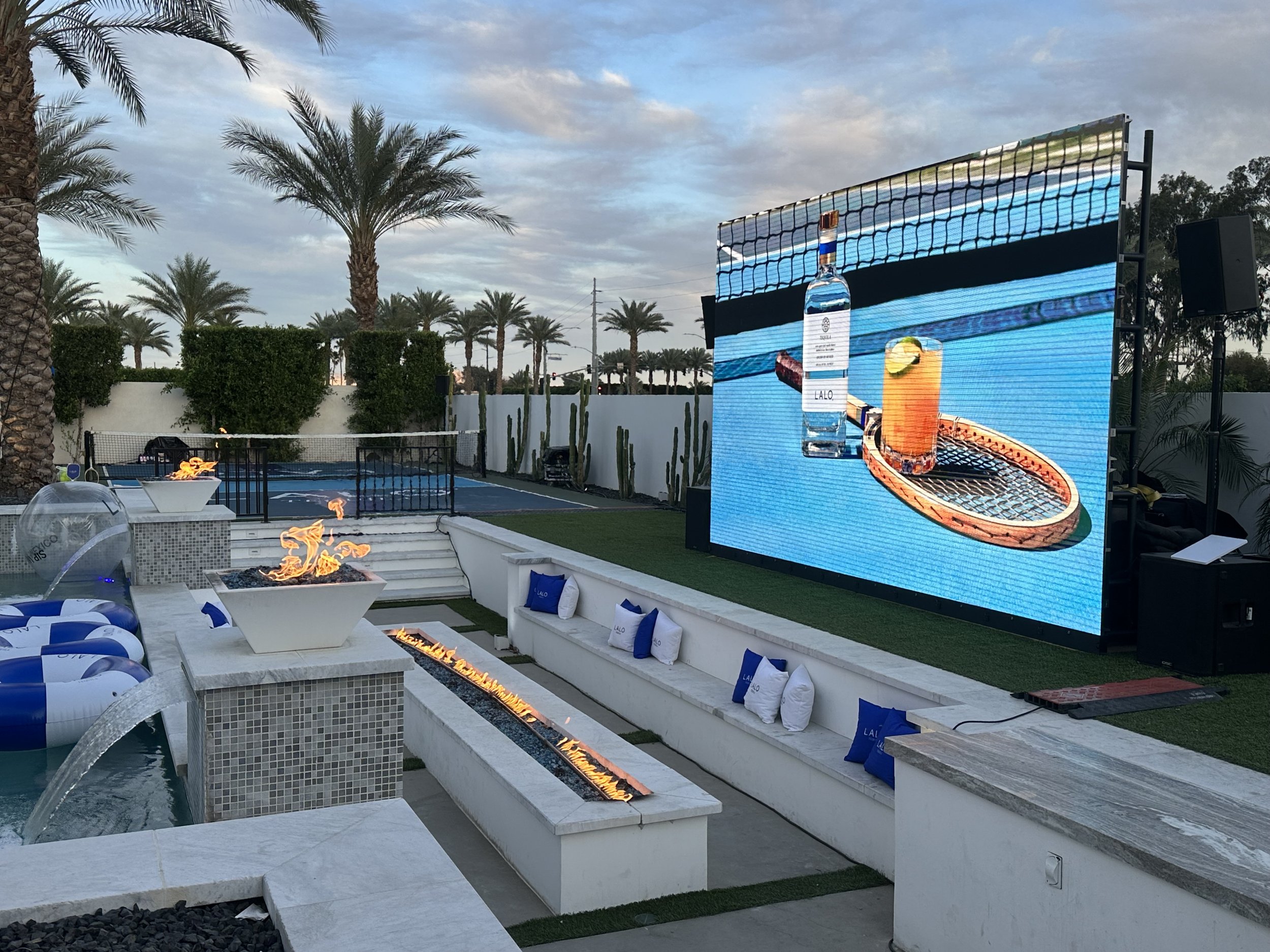
Festivals, galas, and outdoor events rely on LED because ambient light and long throw distances can make projection ineffective. Outdoor-rated or high-brightness LED solutions are designed for those conditions. If the audience needs to see content clearly before sunset or from a distance, LED is usually the safer production choice.
Medical meetings, conferences, and general sessions also benefit from LED when presenters are showing detailed graphics, data, or video. In those settings, readability is not a luxury. It affects attendee engagement and message retention.
Choosing the right LED wall starts with the room
The best LED wall is not simply the biggest one. It is the one matched to the venue, audience, and content. Pixel pitch is a good example. A tighter pixel pitch creates a sharper image at closer viewing distances, which is often ideal for indoor meetings, panel discussions, and exhibits where attendees are standing near the screen. A wider pixel pitch may work well for larger rooms or outdoor events where the audience is farther back.
Screen size should be driven by sightlines and content composition. If you are showing spreadsheets, detailed charts, or speaker support graphics, viewers need enough image height to read comfortably from the farthest seat. If the wall is primarily scenic with bold branding and video, the sizing conversation changes. Bigger can be better, but only if the content and room support it.
Mounting method also affects planning. Ground-supported LED walls are common for hotel ballrooms, conference rooms, and many indoor stages. Flown walls may be better for larger productions where stage real estate is limited or sightlines need to stay open. Outdoor setups may require additional engineering, ballast, wind planning, and power coordination. These are production decisions, not just rental line items.
Content matters as much as the hardware
An LED wall can only perform as well as the content fed into it. That is where many event teams run into avoidable issues. Presentations designed for 16:9 may not translate cleanly to extra-wide formats. Video playback, lower thirds, confidence feeds, and branded scenic looks need to be mapped correctly to the final canvas.
This is why event planners benefit from working with a production partner that handles both equipment and execution. The wall, processor, switching, playback, scaling, and show flow all need to align. If one part is overlooked, the audience notices. If everything is coordinated properly, the visuals look intentional from the first walk-in slide to the final cue.
For live events with presenters, panels, or entertainment, LED walls often work best when integrated with camera systems, graphics playback, presentation switching, and stage lighting. The goal is not just a bright screen. The goal is a complete visual environment that supports the event agenda.
What to look for in an LED wall rental partner
The inventory matters, but support matters more. Plenty of vendors can provide panels. Fewer can help you determine the right configuration, manage install timing, support rehearsals, troubleshoot signal flow, and execute show cues under pressure. For corporate and live event environments, that difference is significant.
A strong rental partner should ask practical questions early. What is the room size? How far is the last row? What kind of content will be shown? Is the wall scenic, informational, or both? Will it be flown or ground supported? Are there general sessions, breakouts, or hybrid components tied into the same event? These questions help avoid underbuilt systems and last-minute changes.
You also want transparency around power, labor, load-in requirements, and venue restrictions. LED walls can be straightforward, but they are rarely plug-and-play in a professional event setting. Access hours, union rules, rigging approvals, cable paths, and control positions all affect the final plan.
That is where a full-service production company has a clear advantage. When the same team can provide the LED wall, video engineering, staging, audio, lighting, and technical support, coordination gets easier and execution gets tighter. T-REV Productions approaches LED this way because clients are not just renting a screen. They are protecting the audience experience.
Budget, scale, and the real trade-offs
LED walls typically cost more than projection, especially as resolution tightens and screen size grows. That does not mean they are always the right fit. If the event is small, the room is controlled, and the content is simple, a projector may still deliver good value.
But budget decisions should account for outcomes, not just line-item comparisons. If projection requires extensive drape for light control, longer throw distances, dimmer room conditions, or compromises in image clarity, the lower rental price may not actually create the better event. LED often earns its cost by reducing those compromises and improving visual performance where it matters most.
There is also a scale benefit. For multi-room conferences, trade show programs, and event series, a production partner can often align LED walls with other video, staging, and support needs in a more efficient way than sourcing each piece separately. That saves time during planning and reduces risk onsite.
When LED wall rental for events delivers the strongest ROI
The strongest return usually comes when visuals directly affect engagement, branding, or message delivery. Think keynote sessions, product launches, sponsor-heavy conferences, investor presentations, exhibits, awards shows, and live entertainment environments. In these settings, the screen is part of the experience, not just a utility.
It also pays off when your event needs to look current and camera-ready. Hybrid programs, recap videos, social content capture, and executive presentations all benefit from a cleaner stage picture. LED helps create that finish, especially when the wall is integrated into the scenic and technical design from the start.
If your event has real visibility, complex content, or a venue that works against traditional display methods, LED is often the practical answer. The key is specifying it correctly and supporting it with the right production infrastructure.
A strong LED wall does more than display content. It gives your event a visual anchor, supports clearer communication, and helps every cue land the way it should. If you want the screen to work as hard as the rest of the show, plan it early and build it with a team that knows how to execute.